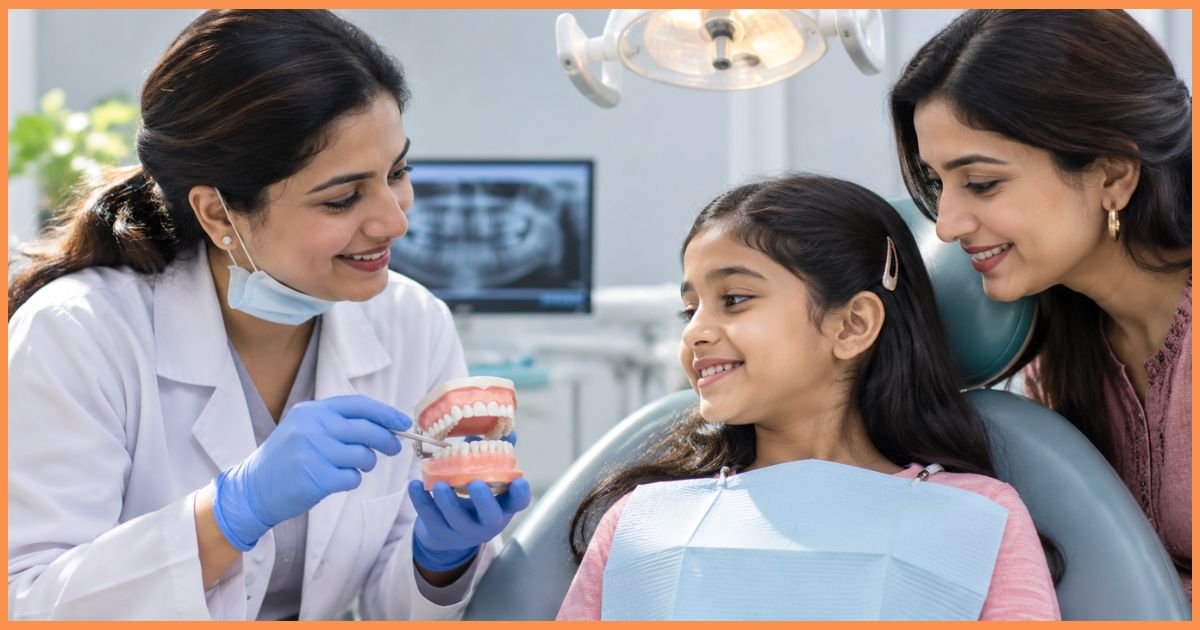
Misaligned teeth can affect more than just the appearance of your smile. They may also make chewing difficult, create challenges while brushing and flossing, and increase the risk of plaque buildup in certain areas. Fortunately, modern orthodontic treatments offer effective ways to straighten teeth and improve overall dental health.
Two popular options are traditional braces and clear aligners. Both are designed to correct crooked teeth, close gaps, and improve bite alignment. However, they work differently, and the right choice depends on the severity of the dental problem, lifestyle, treatment goals, and personal preferences.
One common question patients ask is: Which works better for misaligned teeth, braces or clear aligners?
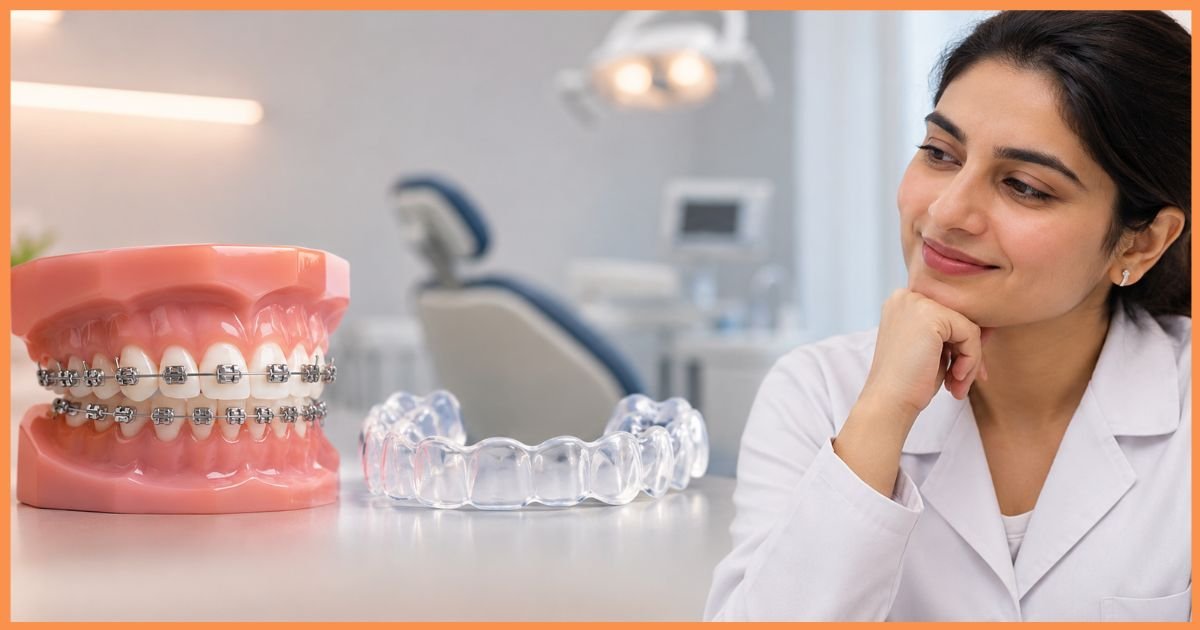
The answer is not the same for everyone. While braces may be more suitable for complex orthodontic problems, clear aligners can be a convenient option for people with mild to moderate alignment concerns. Understanding their differences can help you make a more informed decision.
At Dr Khullar Dental Clinic, patients can discuss their orthodontic concerns with a dental professional and explore treatment options based on their individual dental needs.
What Causes Teeth to Become Misaligned?
Misaligned teeth, also known as malocclusion, occur when the upper and lower teeth do not fit together properly or when teeth are positioned incorrectly within the jaw.
Several factors can contribute to this condition, including:
- Genetics: Jaw size, tooth size, and inherited dental characteristics can influence tooth alignment.
- Childhood habits: Prolonged thumb sucking, tongue thrusting, or extended pacifier use may affect developing teeth.
- Premature tooth loss: Losing baby teeth too early can allow nearby teeth to shift into the empty space.
- Crowded teeth: When the jaw does not have enough room for all the teeth, they may overlap or rotate.
- Jaw development: Differences in upper and lower jaw growth can contribute to bite problems.
- Impacted teeth: Teeth that do not erupt properly may affect the position of neighbouring teeth.
Identifying the underlying cause is important because orthodontic treatment should address both tooth positioning and the patient’s overall bite.
What Are Traditional Braces?
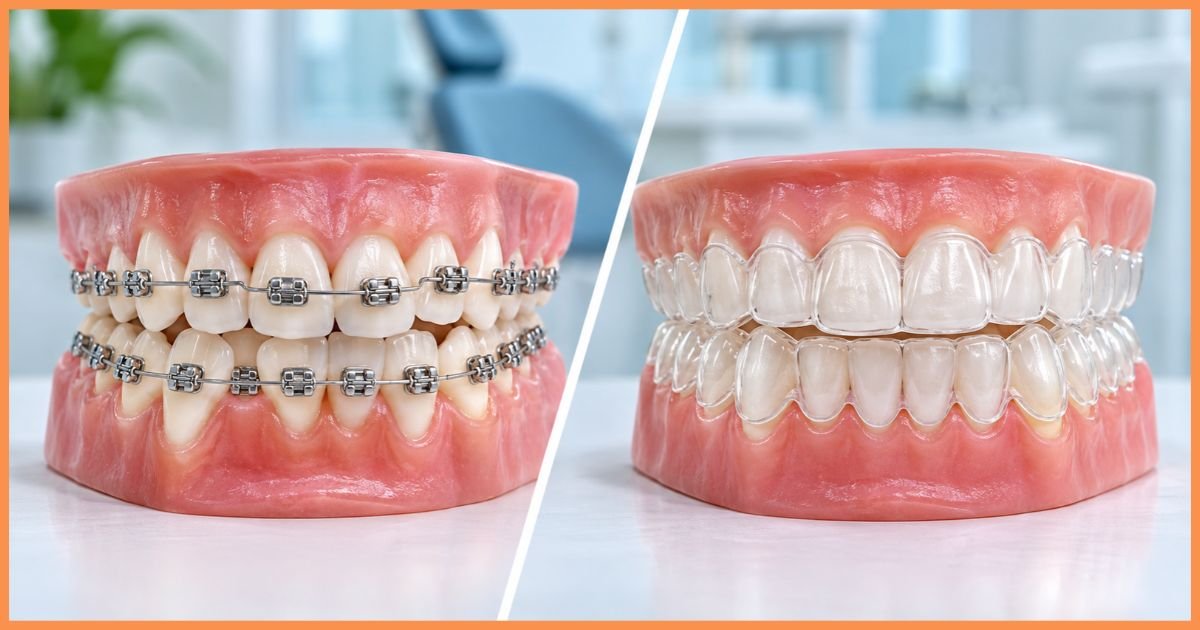
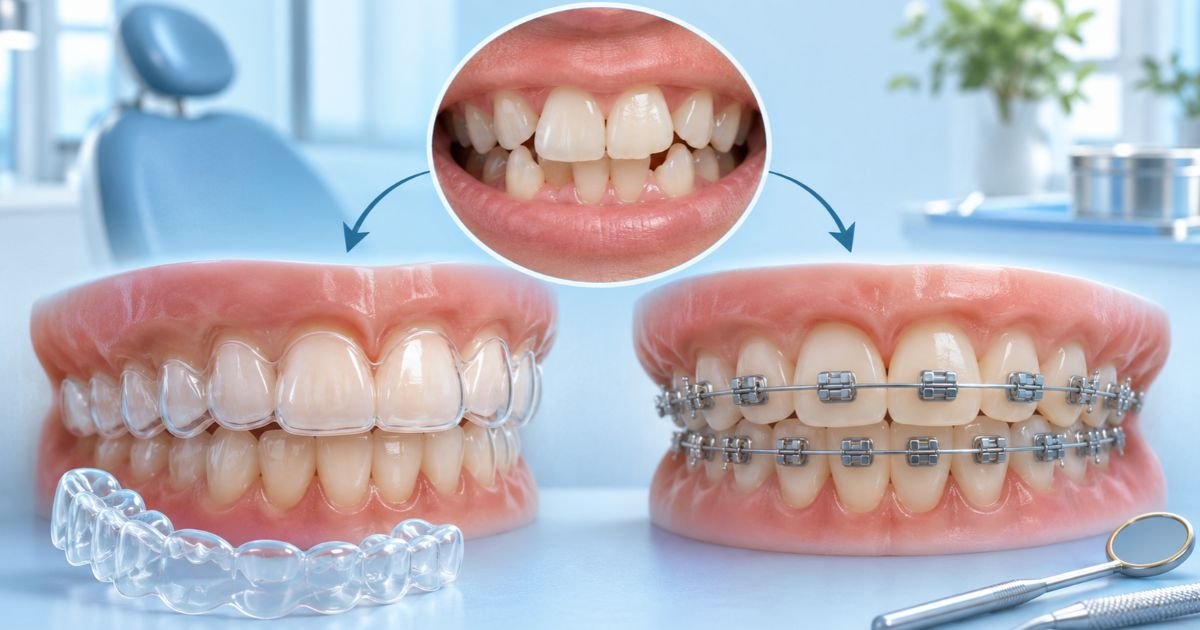
Traditional braces are fixed orthodontic appliances used to gradually move teeth into their desired positions. They generally consist of small brackets attached to the teeth and connected with an orthodontic wire.
The wire applies controlled pressure, encouraging teeth to move gradually through the surrounding bone. During treatment, the orthodontist adjusts the appliance to guide the teeth towards better alignment.
Benefits of Traditional Braces
- Suitable for complex cases: Braces can address severe crowding, rotated teeth, significant spacing, and many bite-related problems.
- Continuous treatment: Since braces remain attached to the teeth, treatment does not depend on remembering to wear an appliance.
- Precise tooth movement: Orthodontists can use different mechanics to control tooth position and bite correction.
- Different options available: Metal, ceramic, and other specialised bracket systems may be considered depending on the patient’s needs.
Limitations of Traditional Braces
Despite their effectiveness, braces have a few considerations:
- Food particles can become trapped around brackets and wires.
- Brushing and flossing require additional care.
- Some patients experience temporary soreness after adjustments.
- Certain hard or sticky foods may need to be avoided.
- The brackets and wires are visible, particularly with conventional metal braces.
Braces remain a widely used orthodontic option because they offer reliable control over many types of tooth movement.
What Are Clear Aligners?
Clear aligners are removable, transparent trays designed to gradually straighten teeth. They are usually made from specially manufactured medical-grade plastic and are created using digital scans or impressions of the patient’s teeth.
Unlike traditional braces, clear aligners do not use brackets or wires. Instead, patients receive a series of custom-made trays, with each set applying gentle pressure to move specific teeth.
Each aligner is worn for a prescribed period before moving to the next one in the treatment sequence.
Benefits of Clear Aligners
- Nearly invisible appearance: Transparent trays are less noticeable than conventional metal braces.
- Removable design: Patients can remove them while eating, drinking anything other than water, and brushing their teeth.
- Easier oral hygiene: Normal brushing and flossing are generally easier without fixed brackets.
- Convenient eating: There are fewer food restrictions because aligners are removed during meals.
- Smooth material: The trays generally cause less irritation to the cheeks and lips than traditional brackets and wires.
Limitations of Clear Aligners
Clear aligners are convenient, but they also require commitment.
- They generally need to be worn around 20 to 22 hours daily, depending on the treatment plan.
- Forgetting to wear them can delay progress.
- They must be removed before eating or drinking anything other than water.
- Patients need to clean their aligners regularly.
- Some complex tooth movements may be more difficult or may require additional orthodontic techniques.
Clear aligners are particularly appealing to adults and teenagers who prefer a discreet orthodontic treatment option and can follow the prescribed wearing schedule.
Braces vs Clear Aligners: What Is the Difference?
Both treatments aim to improve tooth alignment, but their working methods, maintenance requirements, and suitability can differ.
Here is a quick comparison to help you understand the differences.
| Comparison | Traditional Braces | Clear Aligners |
| Appearance | Visible brackets and wires | Transparent trays |
| Removability | Fixed to teeth | Removable |
| Eating | Some food restrictions | Remove before meals |
| Oral hygiene | Requires extra cleaning | Easier brushing and flossing |
| Compliance | Remain in place | Require consistent daily wear |
| Complex cases | Suitable for many complex cases | Case-dependent |
| Adjustments | Periodic orthodontic visits | New trays and progress checks |
| Comfort | Initial soreness and possible irritation | Temporary pressure with new trays |
The important point is that neither treatment is automatically better. The complexity of the dental condition and the accuracy of treatment planning matter more than the appliance alone.
American Association of Orthodontists+2
Which Works Better for Different Dental Problems?
The effectiveness of braces and clear aligners depends on the type of misalignment.
1. For Crowded Teeth
Crowding happens when there is insufficient space for all the teeth to sit properly. Teeth may overlap, rotate, or become twisted.
Traditional braces can provide controlled movement and are often preferred when crowding is severe. Clear aligners may also work well for mild to moderate crowding, depending on the available space and required tooth movements.
2. For Gaps Between Teeth
Spacing occurs when there are visible gaps between neighbouring teeth.
Clear aligners can be a suitable option for many mild to moderate spacing problems. Braces can also close gaps and may be more appropriate when spacing is associated with complicated bite issues.
3. For Overbite
An overbite occurs when the upper front teeth overlap the lower front teeth more than expected.
Both braces and clear aligners may help correct certain overbite conditions. However, significant bite discrepancies may require braces, attachments, elastics, or other orthodontic techniques.
4. For Underbite
An underbite occurs when the lower front teeth sit ahead of the upper front teeth.
Treatment depends on whether the problem is related to tooth positioning or the underlying jaw structure. Braces may help correct dental underbites, while more significant skeletal discrepancies may require additional treatment planning.
5. For Crossbite
A crossbite develops when some upper teeth sit inside the lower teeth instead of outside them.
Both treatment approaches may be considered in selected cases. However, complex crossbites may require specialised orthodontic appliances or additional procedures.
Is Braces Treatment Faster Than Clear Aligners?
Treatment duration depends on the severity of misalignment, the amount of tooth movement required, patient cooperation, and the type of orthodontic appliance used.
Some mild alignment problems may be corrected within several months, while more complicated cases can require a few years.
Traditional braces provide continuous pressure because they remain attached to the teeth. Clear aligners work through a planned sequence of trays, and their success depends heavily on wearing them for the prescribed number of hours.
It is important not to choose a treatment simply because someone promises faster results. Moving teeth too quickly or without proper monitoring can compromise dental health.
What Should You Consider Before Choosing an Orthodontic Treatment?
Before deciding between braces and clear aligners, consider the following factors.
- Severity of misalignment
The amount of crowding, spacing, rotation, and bite correction required plays an important role in treatment selection.
- Daily lifestyle
People with busy schedules or frequent social interactions may prefer clear aligners because of their discreet appearance. However, they must be comfortable wearing them consistently.
- Oral hygiene habits
Both treatments require proper dental hygiene. Braces need careful cleaning around brackets and wires, while aligners must be removed before eating and cleaned regularly.
- Treatment cost
The cost of orthodontic treatment varies depending on the appliance, case complexity, treatment duration, and follow-up requirements. Discuss the complete estimated cost with your dentist before beginning treatment.
- Long-term results
Teeth can gradually shift after orthodontic treatment. Retainers are generally necessary after both braces and clear aligners to maintain the corrected alignment.
Why Is an Orthodontic Consultation Important?
Choosing an orthodontic appliance without a proper dental examination can lead to an unsuitable treatment plan.
An orthodontic assessment generally includes:
- Examination of teeth, gums, and jaw alignment.
- Evaluation of the bite and spacing between teeth.
- Dental photographs and digital scans or impressions, where appropriate.
- Dental X-rays when clinically indicated.
- Assessment of the overall oral health condition.
- Discussion of suitable treatment options and expected outcomes.
This evaluation helps the dental professional understand the underlying problem and recommend an appropriate treatment approach.
Braces Treatment in Gurgaon: Finding the Right Approach for Your Smile
If you are considering orthodontic correction, selecting the right treatment is an important step towards improving your dental alignment and bite.
At Dr Khullar Dental Clinic, patients exploring Braces Treatment in Gurgaon can discuss their concerns about crooked teeth, overcrowding, gaps, and bite irregularities.
The treatment approach should be based on a proper clinical assessment rather than appearance or convenience alone. Some patients may benefit from traditional metal braces, while others may be suitable candidates for ceramic braces or clear aligners.
A personalised treatment plan can help establish realistic expectations about the treatment process, duration, maintenance, and long-term retention.
The aim of orthodontic care is not simply to achieve straighter teeth. It is also to support a functional bite, healthy gums, and better long-term oral hygiene.
How Can You Maintain Your Teeth After Orthodontic Treatment?
Completing braces or clear aligner treatment is an important milestone, but maintaining the results requires ongoing care.
Here are some useful habits:
- Wear retainers as advised: Retainers help prevent teeth from gradually shifting back towards their original positions.
- Maintain daily oral hygiene: Brush twice daily and clean between your teeth regularly.
- Attend follow-up appointments: Regular dental visits help monitor tooth stability and overall oral health.
- Avoid harmful habits: Do not bite hard objects or use your teeth to open packages.
- Follow professional advice: Use your retainer according to the schedule recommended by your treating dentist.
Remember, orthodontic treatment does not guarantee that teeth will remain permanently in their new positions without retention.
Frequently Asked Questions
1. Are braces more effective than clear aligners?
Braces can offer better control in many complex orthodontic cases, including severe crowding and complicated bite problems. Clear aligners can be equally effective for selected mild to moderate cases when used correctly.
2. Can clear aligners fix severely crooked teeth?
Some severe alignment problems may be treated with clear aligners, but not every case is suitable. The decision depends on the required tooth movements, bite condition, and clinical assessment.
3. Are clear aligners more comfortable than traditional braces?
Clear aligners generally have smooth surfaces and may cause less irritation to the cheeks and lips. However, patients can experience pressure or temporary soreness when switching to a new tray.
4. How many hours should I wear clear aligners daily?
Most clear aligner treatments require approximately 20 to 22 hours of daily wear. Your dentist will provide specific instructions according to your treatment plan.
5. Can adults get braces to correct misaligned teeth?
Yes. Adults can undergo orthodontic treatment if their teeth and gums are healthy enough for the planned tooth movements. Both traditional braces and clear aligners may be suitable options.
6. Do I need retainers after braces or clear aligners?
Yes. Retainers are generally recommended after both treatments because teeth can shift over time. Your dentist will guide you on the type of retainer and how frequently to wear it.
7. Which treatment is more affordable, braces or clear aligners?
Traditional metal braces are often less expensive than clear aligners, although costs vary depending on the clinic, treatment complexity, and appliance selected. A personalised estimate is best obtained after examination.
8. Can I switch from braces to clear aligners during treatment?
In selected situations, switching may be possible. However, it requires reassessment of tooth movement, treatment progress, and the remaining correction needed. It should only be done under professional supervision.
Final Thoughts: Braces or Clear Aligners, Which Should You Choose?
Both braces and clear aligners can help correct misaligned teeth and improve dental function. The difference lies in how they work and which dental conditions they can address effectively.
Traditional braces may be a more suitable choice for complex tooth movements and significant bite problems. Clear aligners offer a discreet and removable alternative for patients whose dental conditions are appropriate for this approach.
Rather than choosing based only on appearance, consider your dental condition, treatment goals, daily habits, and professional recommendations.
At Dr Khullar Dental Clinic, an individual dental assessment can help you understand the available orthodontic options and make an informed decision about your smile.